Table of Contents
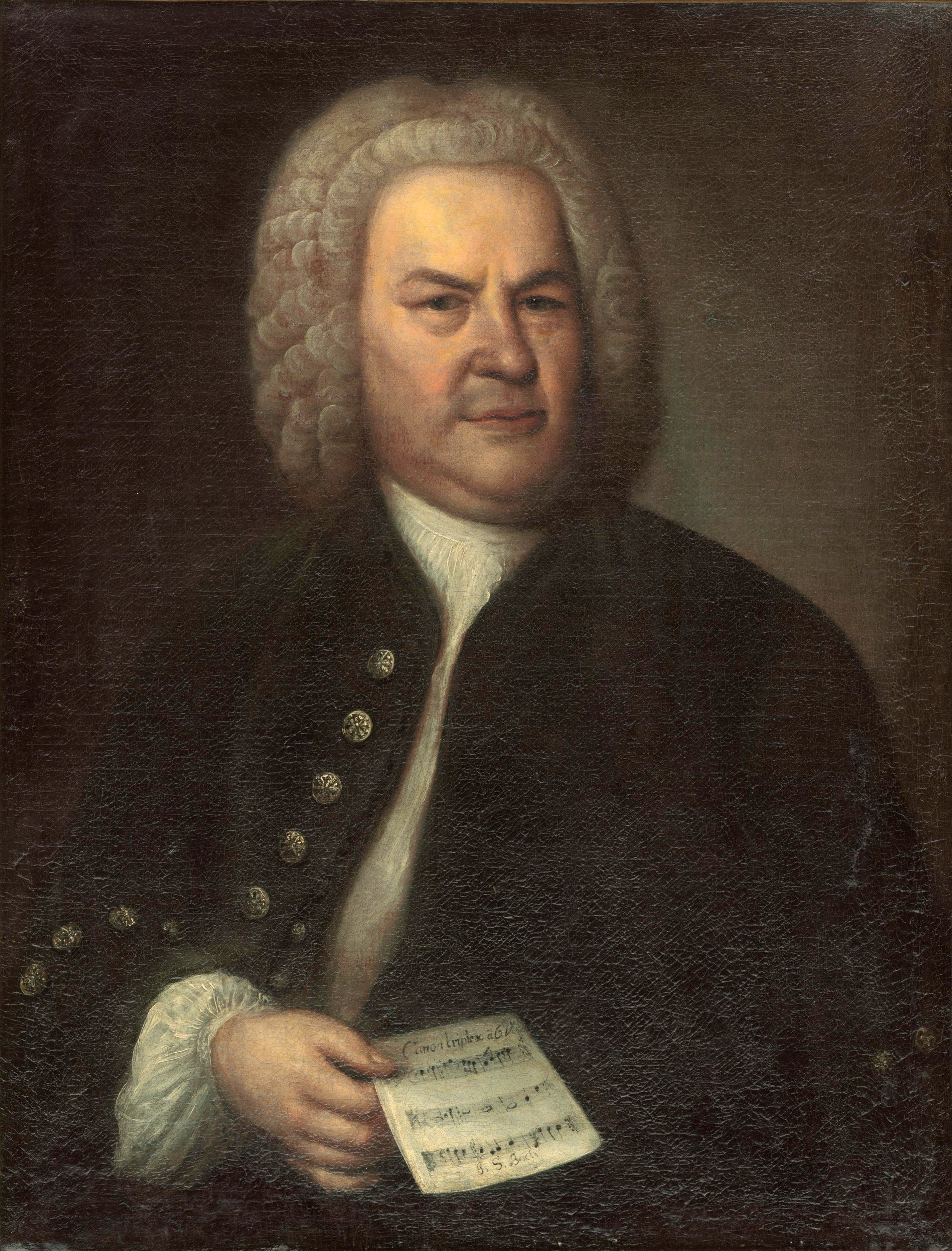
If you listen to The Listening Path for any length of time, you will meet Johann Sebastian Bach. His keyboard music, played on solo piano, appears more often than any other composer's. This post is a short introduction to Bach, the pieces you will hear, and the pianists who recorded them.
Who was Johann Sebastian Bach?
Bach was a German composer of the Baroque era, born in Eisenach in 1685 and died in Leipzig in 1750. He came from a large family of musicians and is now widely regarded as one of the greatest composers of all time.
In his own lifetime he was admired mostly as a keyboard player and organist, and as an expert on organ building. He held posts at the court of Weimar, then as music director to Prince Leopold of Köthen, and from 1723 as director of church music in Leipzig, where he was cantor of the school at St Thomas.
He was also a dedicated teacher who was rarely without pupils. Several of his sons became composers in their own right.
Why is there so much Bach in The Listening Path?
Because his keyboard music suits a quiet, unhurried listening session. It is clear, steady and even, and on a solo piano each line can be followed easily.
Much of the Bach you will hear is counterpoint: two, three or four melodies moving together, each one complete in itself. You don't need to follow them. Many people simply let the music carry on around them while they rest or read.
Where will I hear Bach in each program?
It depends on the length you choose. Bach appears in all three programs, in slightly different ways.
- 40 minutes: every session includes a stretch of solo Bach piano. This daily piano is what gives the 40-minute program its balanced feel.
- 30 minutes and 60 minutes: from Level 2 onward, the seventh session of each week is solo Bach piano, closing the week. The first two weeks close with Chopin.
The shorter lengths on our site are samples, not full programs. You can read how the weeks fit together in What is The Listening Path?
Which Bach pieces are in The Listening Path?
Three of his great keyboard collections, 117 recordings in all across the 30, 40 and 60-minute programs. Each session page lists the pieces in order, and the full list is on our credits page.
| Work | What you'll hear | Performer |
|---|---|---|
| The Well-Tempered Clavier, Book I, BWV 846–869 | All 24 preludes and all 24 fugues | Kimiko Ishizaka |
| Goldberg Variations, BWV 988 | The Aria, all 30 variations and the Aria da capo | Kimiko Ishizaka |
| Goldberg Variations, BWV 988 | The Aria, 16 of the variations and the Aria da capo (40-minute program) | Shelley Katz |
| The Art of the Fugue, BWV 1080 | Contrapuncti 1 to 12, the inverted fugues, four canons, and the final fugue with the pianist's own completion | Kimiko Ishizaka |
Session-by-session lists: 30-minute program · 40-minute program · 60-minute program
What are these three collections?
They are among the best-known keyboard works ever written. Each has its own character.
The Well-Tempered Clavier, Book I dates from 1722, during Bach's years at Köthen. It is a set of 24 preludes and fugues, one pair in every major and minor key. Bach later wrote a second book, and the two together are often called "the Forty-Eight".
The Goldberg Variations were published in 1741. The work opens with a gentle aria, follows it with thirty variations, and ends by returning to the same aria.
The Art of the Fugue was Bach's last great project. He did not finish it before he died, and it was published, unfinished, in 1751. Kimiko Ishizaka's recording includes her own completion of the final fugue.
Who plays the music?
Most of the Bach in The Listening Path is played by the pianist Kimiko Ishizaka. Her recordings of all three collections are released under a CC0 licence, free for anyone to use.
Some of the Goldberg Variations in the 40-minute program are played by Shelley Katz, from a recording project released by Musopen, also under CC0. We are grateful to both. You can see every recording, its source and its licence on the credits page.
Do I need to know anything about Bach to enjoy this?
No. There is nothing to study and no right way to listen.
Speakers in a quiet room are ideal. Headphones or earbuds, such as AirPods, are fine too. Keep the volume comfortable, about the level of an easy conversation. Our How to listen guide has more detail, and How NeuraSonic listening works explains how a session is put together.
When can I listen?
The Listening Path opens first to our First Listeners. The opening date and the full details go to the interest list first.
Sources
- Robert L. Marshall, "Johann Sebastian Bach," Encyclopaedia Britannica, updated Nov. 1, 2026. https://www.britannica.com/biography/Johann-Sebastian-Bach (dates and places of birth and death; Weimar, Köthen and Leipzig posts; cantor at St Thomas; Well-Tempered Clavier Book I, 1722, and "the Forty-Eight"; Goldberg Variations published 1741; The Art of the Fugue unfinished, published 1751; family of musicians; sons who were composers; teacher).
- NeuraSonic credits page, https://en.neurasonic.com/credits (performers, recording sources and CC0 licences).