Table of Contents
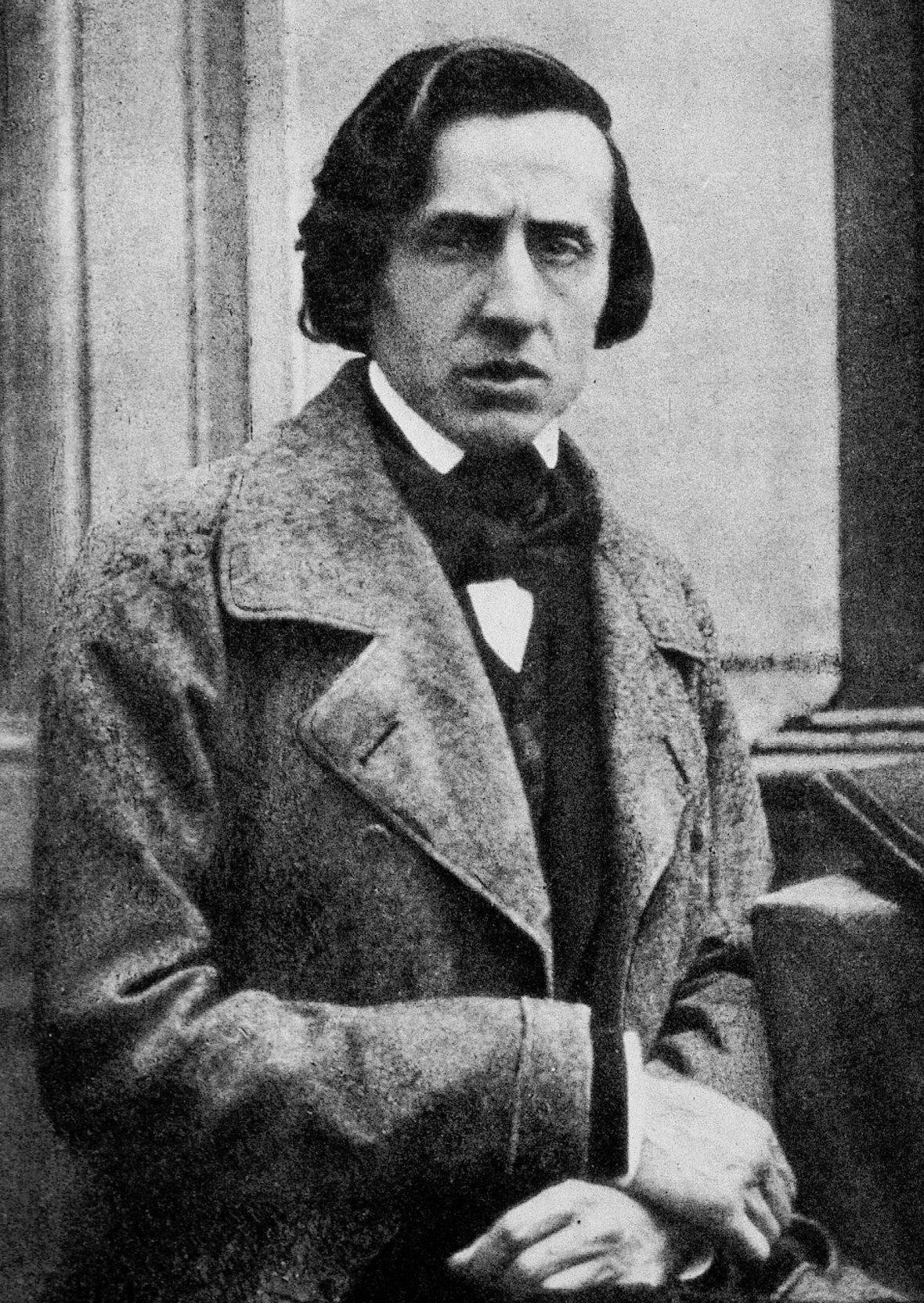
Frédéric Chopin is one of the composers you will hear most often in The Listening Path. His music appears in every session length, from the shortest to the longest. This post is a short introduction to Chopin, the pieces we use, and the musicians who recorded them.
Who was Frédéric Chopin?
Chopin was a Polish-French composer and pianist, born on March 1, 1810, in Żelazowa Wola, near Warsaw, and died in Paris on October 17, 1849, at 39. He is best known for his solo piano music, and he is ranked among music's greatest tone poets.
He started piano lessons at seven and gave his first public concert at eight. At seven he also wrote a Polonaise in G minor, which was printed. He later studied at the new Warsaw Conservatory with the composer Joseph Elsner, and the folk music of the Polish countryside left a lasting colour on his work.
After concerts in Vienna in 1829, he left Poland and settled in Paris in 1831. There he became friends with Franz Liszt and Hector Berlioz, and he made his living mainly by teaching and composing. Many of his finest pieces were written during long summers at Nohant, the country house of the novelist George Sand.
Why is Chopin in The Listening Path?
Because his music sings. Almost all of it is written for one instrument, the piano, and it often carries a clear melody over a gentle, flowing accompaniment.
As a teacher, Chopin cared above all about a beautiful, singing tone. Many of his pieces are short, so they fit sessions of every length. You don't need to follow them closely. You can simply let them play while you rest or read.
Where will I hear Chopin?
In every length of the program, from the 3.75-minute sessions to the 75-minute ones. Some pieces return in several lengths, and others appear in just one.
Each session page lists its pieces in order. You can read how the weeks fit together in What is The Listening Path?
Which Chopin pieces are in The Listening Path?
More than 70 pieces, nearly all for solo piano. The full list, with every recording, is on our credits page.
| Kind of piece | How many | A few you'll hear |
|---|---|---|
| Preludes, Op. 28 | 16 | Nos. 7, 11, 19 and 23 |
| Waltzes | 14 | Grande valse brillante, Op. 18; Op. 64 No. 1; Op. 69 No. 1 |
| Mazurkas | 14 | Op. 7, Op. 24, Op. 50, Op. 56 and Op. 59 |
| Nocturnes | 11 | Op. 9 No. 2; Op. 27 No. 2; Op. 72 No. 1 |
| Polonaises | 6 | Polonaise in G minor, B. 1 |
| Cello Sonata in G minor, Op. 65 | All four movements | |
| Other pieces | 8 | Fantaisie-Impromptu, Impromptu No. 2, Tarantelle, Souvenir de Paganini, Wiosna |
What are these pieces?
They are mostly short forms that Chopin returned to all his life.
The Preludes, Op. 28 are a set of 24 short pieces, one in each major and minor key. We use 16 of them.
The mazurkas are his largest group of works: he wrote at least 58 between 1824 and 1849. They grew from a Polish folk dance, and many carry its lilt.
The polonaises take their name from another Polish dance. He wrote his first in 1817, at seven. The G minor polonaise in our list, B. 1, is that early piece.
The waltzes and nocturnes range from the bright Grande valse brillante to the slow, song-like Nocturne in E-flat, Op. 9 No. 2.
The Cello Sonata dates from 1845 to 1847. Chopin wrote it for his friend, the cellist Auguste Franchomme, and it was the last of his works published in his lifetime. The two of them played its last three movements at the Salle Pleyel in Paris on February 16, 1848.
Who plays the music?
Several pianists and one duo. The named pianists are Aya Higuchi, Frank Levy, Xuan He, Luke Faulkner, Jeannette Fang, Diana Hughes and Olga Gurevich. The Cello Sonata is played by Christopher Harding, piano, and Yeonjin Kim, cello.
Most recordings come from Musopen's Chopin collection and are released under a CC0 licence, free for anyone to use. For many of them the source does not name the performer, and the credits page says so. A few recordings by Xuan He, Luke Faulkner and Olga Gurevich are shared by Musopen under a CC BY 4.0 licence. We are grateful to every musician. You can see each recording, its source and its licence on the credits page.
Do I need to know anything about Chopin to enjoy this?
No. There is nothing to study and no right way to listen.
Speakers in a quiet room are ideal. Headphones or earbuds, such as AirPods, are fine too. Keep the volume comfortable, about the level of an easy conversation. Our How to listen guide has more detail. You can meet the other composers of the series in Bach in The Listening Path and Mozart in The Listening Path.
When can I listen?
The Listening Path opens first to our First Listeners. The opening date and the full details go to the interest list first.
Sources
- Arthur Hedley, "Frédéric Chopin," Encyclopaedia Britannica, updated Nov. 22, 2026. https://www.britannica.com/biography/Frederic-Chopin (birth and death dates and places; Polish French composer and pianist best known for solo piano works; "one of music's greatest tone poets"; piano lessons at seven; first public appearance at eight; Polonaise in G minor written at seven and printed; Warsaw Conservatory and Joseph Elsner; Polish folk music; Vienna 1829; Paris from 1831; Liszt and Berlioz; teaching and composing; Nohant summers with George Sand; "beautiful, singing tone").
- "Preludes (Chopin)," Wikipedia. https://en.wikipedia.org/wiki/Preludes_(Chopin) (24 Preludes, Op. 28, covering all major and minor keys).
- "Mazurkas (Chopin)," Wikipedia. https://en.wikipedia.org/wiki/Mazurkas_(Chopin) (at least 58 mazurkas, 1824–1849, his most extensive genre).
- "Polonaises (Chopin)," Wikipedia. https://en.wikipedia.org/wiki/Polonaises_(Chopin) (first polonaise written in 1817, at seven).
- "Cello Sonata (Chopin)," Wikipedia. https://en.wikipedia.org/wiki/Cello_Sonata_(Chopin) (written late 1845–47; dedicated to Auguste Franchomme; last work published in his lifetime; last three movements performed at the Salle Pleyel on February 16, 1848).
- NeuraSonic credits page, https://en.neurasonic.com/credits (pieces, session lengths, performers, sources and licences).