Table of Contents
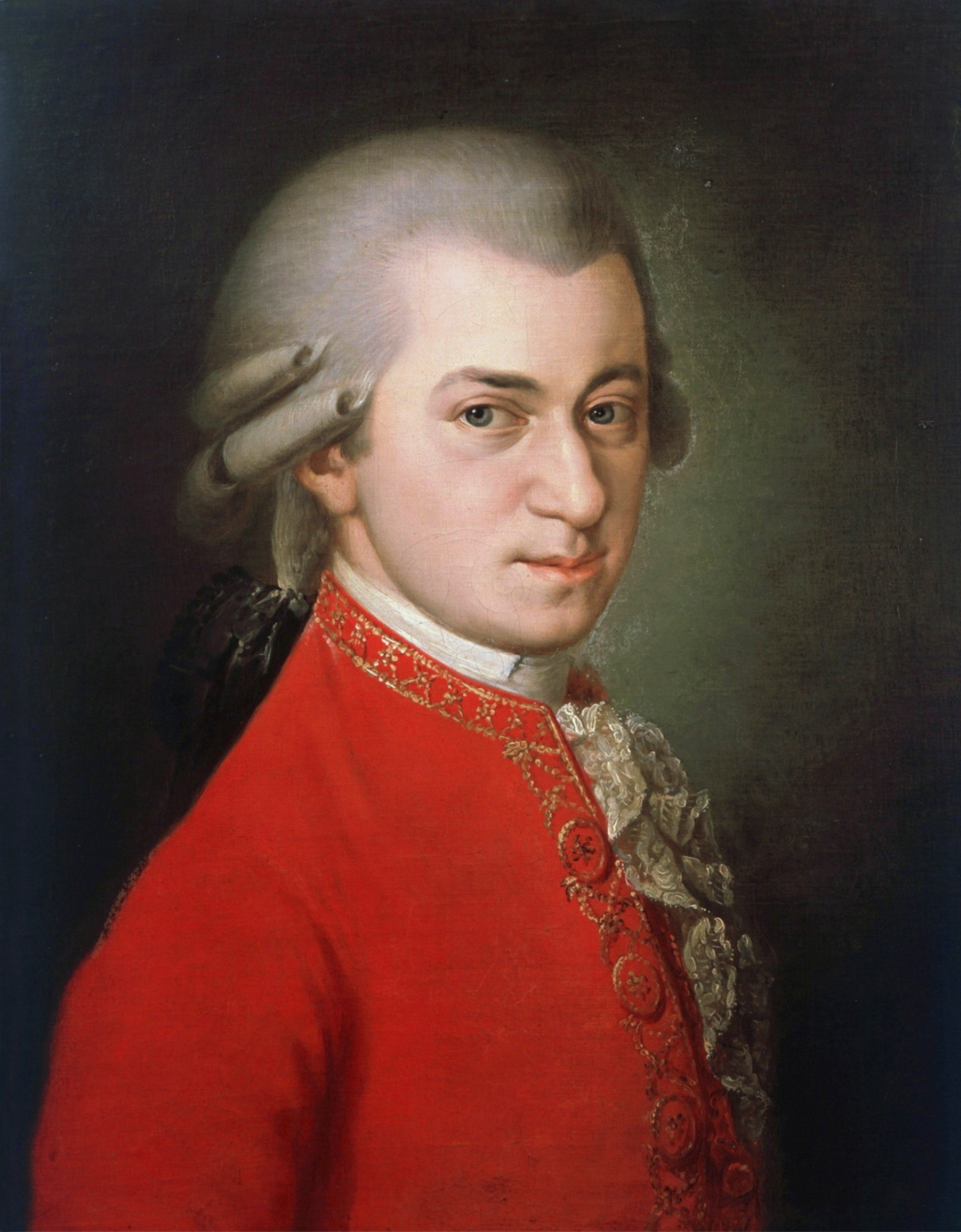
Wolfgang Amadeus Mozart is one of the composers you will hear most often in The Listening Path. His music appears in every session length, from the shortest to the longest. This post is a short introduction to Mozart, the six works we use, and the musicians who recorded them.
Who was Wolfgang Amadeus Mozart?
Mozart was an Austrian composer, born in Salzburg on January 27, 1756, and died in Vienna on December 5, 1791, at 35. He is widely recognised as one of the greatest composers in the history of Western music.
He was a child of remarkable musical gifts. His father, Leopold, was a violinist, deputy music director at the Salzburg court, and the author of a famous violin method. From 1763 the family toured Europe for more than three years, and young Wolfgang and his sister, Nannerl, played at courts and in cities such as Munich, Paris and London. In London he met Johann Christian Bach, the youngest son of Johann Sebastian Bach, and wrote his first symphonies.
In 1781 Mozart settled in Vienna, where he spent the last ten years of his life. He wrote more than 600 works, in every musical genre of his day.
Why is Mozart in The Listening Path?
Because his music is clear and balanced. Melodies are easy to follow, phrases answer one another, and the textures stay light, so nothing crowds the ear.
His slow movements, in particular, sing in an even, unhurried way. You don't need to follow them closely. Many people simply let the music carry on around them while they rest or read.
Where will I hear Mozart?
In every length of the program. In most lengths you meet him in the very first week, with the overture to The Marriage of Figaro, and he returns at intervals through the later levels.
Each session page lists its pieces in order. You can read how the weeks fit together in What is The Listening Path?
Which Mozart pieces are in The Listening Path?
Six works, 21 movements in all. Two opera overtures, two string quartets, a symphony and a large serenade for winds. The full list, with every recording, is on our credits page.
| Work | What you'll hear | Performer |
|---|---|---|
| The Marriage of Figaro, overture | The overture | Czech National Symphony Orchestra |
| The Magic Flute, overture | The overture | Czech National Symphony Orchestra |
| String Quartet in D minor, K. 421 | All four movements | Musopen String Quartet |
| String Quartet in C major, K. 465 | All four movements | Musopen String Quartet |
| Symphony No. 40 in G minor, K. 550 | All four movements | Czech National Symphony Orchestra |
| Serenade No. 10 in B-flat, K. 361, Gran Partita | All seven movements | The President's Own United States Marine Band and Marine Chamber Orchestra |
What are these works?
They come from Mozart's ten years in Vienna, and each has its own character.
The Marriage of Figaro is a comic opera that opened at Vienna's Burgtheater on May 1, 1786, with a libretto by Lorenzo Da Ponte. Its bubbling overture was part of its early success.
The Magic Flute was Mozart's last opera, a German singspiel with a libretto by Emanuel Schikaneder. It opened near Vienna on September 30, 1791, just over two months before his death.
The two string quartets belong to a set of six that Mozart dedicated to his friend Joseph Haydn and published in Vienna in 1785. The D minor quartet dates from 1783, and the C major, known as the "Dissonance" for its mysterious opening, from January 1785. After hearing the set, Haydn told Leopold that his son was the greatest composer he knew.
Symphony No. 40 was entered in Mozart's own catalogue on July 25, 1788. He wrote it within a few weeks, alongside his Symphonies Nos. 39 and 41.
The Gran Partita is a serenade in seven movements for thirteen players: twelve wind instruments and a double bass. Mozart began it around 1781. Its third movement, the Adagio, is the music Salieri marvels at in the play and film Amadeus.
Who plays the music?
Three ensembles. The overtures and the symphony are played by the Czech National Symphony Orchestra, and the two quartets by the Musopen String Quartet. Both recordings come from a project by Musopen and are released under a CC0 licence, free for anyone to use.
The Gran Partita is played by The President's Own United States Marine Band and Marine Chamber Orchestra. As a U.S. government recording, it is in the public domain. We are grateful to all three. You can see every recording, its source and its licence on the credits page.
Do I need to know anything about Mozart to enjoy this?
No. There is nothing to study and no right way to listen.
Speakers in a quiet room are ideal. Headphones or earbuds, such as AirPods, are fine too. Keep the volume comfortable, about the level of an easy conversation. Our How to listen guide has more detail, and you can meet another composer of the series in Bach in The Listening Path.
When can I listen?
The Listening Path opens first to our First Listeners. The opening date and the full details go to the interest list first.
Sources
- Stanley Sadie, "Wolfgang Amadeus Mozart," Encyclopaedia Britannica, updated Nov. 19, 2026. https://www.britannica.com/biography/Wolfgang-Amadeus-Mozart (dates and places of birth and death; Leopold as violinist, deputy Kapellmeister at the Salzburg court and author of a famous violin manual; the 1763–66 tour with Nannerl; Johann Christian Bach and the first symphonies in London; more than 600 works; every genre of his day).
- Linda Cantoni, "The Marriage of Figaro," Encyclopaedia Britannica. https://www.britannica.com/topic/The-Marriage-of-Figaro-opera-by-Mozart (Burgtheater premiere, May 1, 1786; Da Ponte; "bubbling overture").
- Betsy Schwarm, "The Magic Flute," Encyclopaedia Britannica. https://www.britannica.com/topic/The-Magic-Flute (singspiel; Schikaneder; premiere near Vienna, September 30, 1791).
- "Haydn Quartets (Mozart)," Wikipedia. https://en.wikipedia.org/wiki/Haydn_Quartets_(Mozart) (move to Vienna 1781; six quartets dedicated to Haydn, published 1785; K. 421 dated 1783; K. 465 "Dissonance" dated January 1785; Haydn's remark to Leopold).
- "Serenade No. 10 (Mozart)," Wikipedia. https://en.wikipedia.org/wiki/Serenade_No._10_(Mozart) (seven movements; twelve winds and double bass; begun around 1781; the Adagio in Amadeus).
- "Symphony No. 40 (Mozart)," Wikipedia. https://en.wikipedia.org/wiki/Symphony_No._40_(Mozart) (catalogue entry July 25, 1788; written alongside Nos. 39 and 41).
- NeuraSonic credits page, https://en.neurasonic.com/credits (works, movements, session lengths, performers, sources and licences).