Table of Contents
Introduction
The mammalian cochlea performs one of nature’s most impressive feats: detecting sounds over a 120 dB dynamic range while resolving frequencies with exquisite precision. For decades, researchers debated how this sharpness and sensitivity arise. A seminal 1992 review by Mario A. Ruggero synthesized breakthrough measurements showing that the basilar membrane itself vibrates with the same sharp tuning and non-linear properties once attributed only to neural responses. Crucially, these properties depend on the active regulation provided by outer hair cells (OHCs)—not as primary sensory detectors, but as a biological “cochlear amplifier.”
Inner vs. Outer Hair Cells: Distinct Roles
The organ of Corti contains two types of hair cells:Inner hair cells (IHCs) are the true sensory transducers. They convert mechanical vibration of the basilar membrane into electrical signals that travel via the auditory nerve to the brain.
Outer hair cells (OHCs) do not primarily send information to the brain. Instead, they act as electromechanical regulators that actively enhance and sharpen the mechanical input delivered to the IHCs.
This division of labor is key: OHCs amplify weak sounds near a cochlear site’s characteristic frequency (CF) by factors exceeding 10,000 while compressing stronger signals, preventing overload.
Evidence from Basilar Membrane Mechanics
Direct measurements of basilar membrane vibration, initially using the Mössbauer technique and later improved with laser Doppler velocimetry, revealed:Near the CF, vibration magnitude grows compressively (as low as 0.2 dB/dB) at moderate intensities, matching the non-linear behavior seen in auditory nerve fibers.
Sharp frequency tuning, two-tone suppression, and distortion products—all previously thought to require a mysterious “second filter”—are fully present in the mechanical vibration itself.
These sensitive, non-linear properties are physiologically vulnerable: they disappear postmortem, after acoustic trauma, or when OHC function is reversibly impaired (e.g., by furosemide, which abolishes the endocochlear potential).
The conclusion is clear: the cochlear amplifier resides in the OHCs, which use energy from the endocochlear potential to actively boost and sharpen basilar membrane motion.
Complementing Middle-Ear Filtering
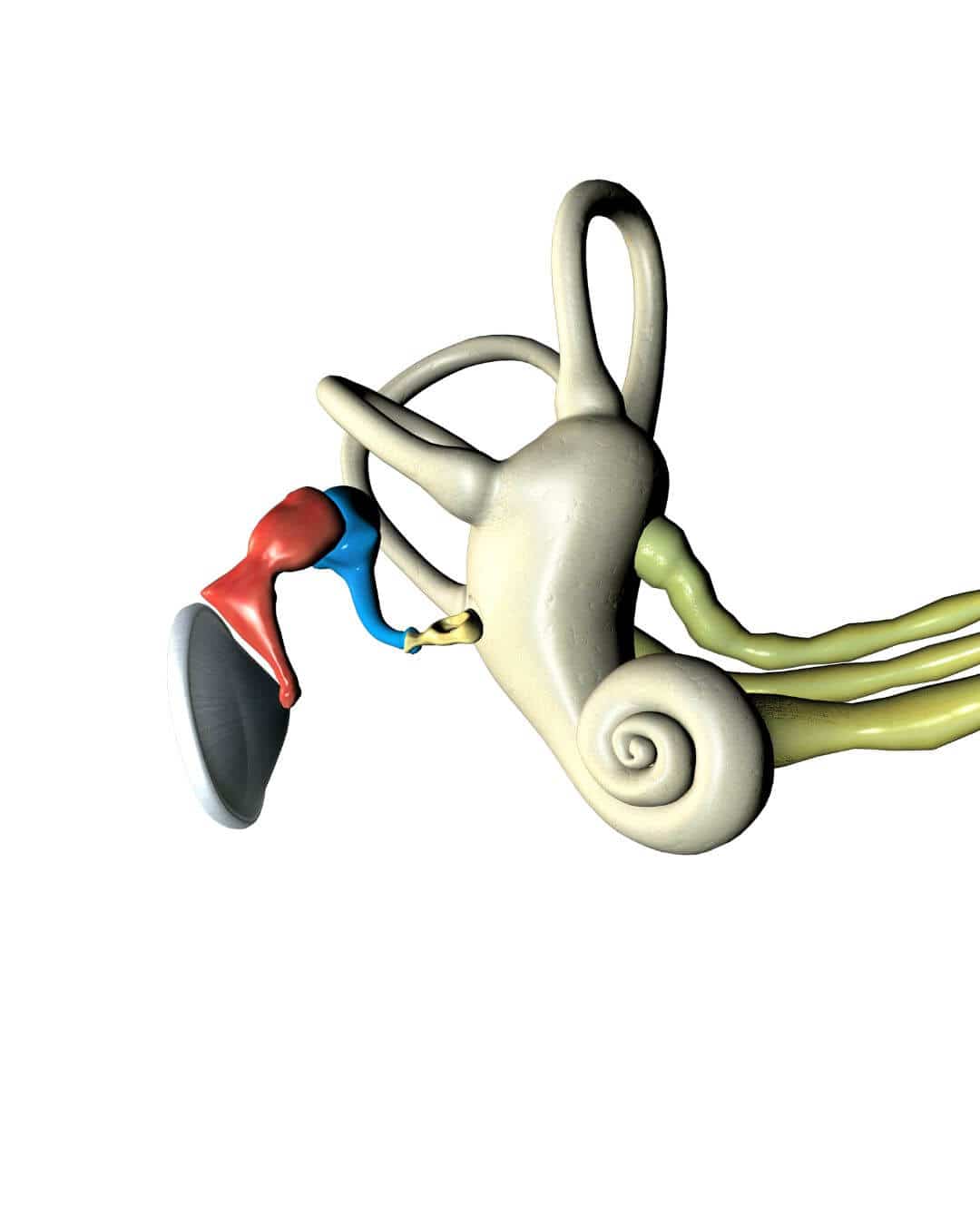
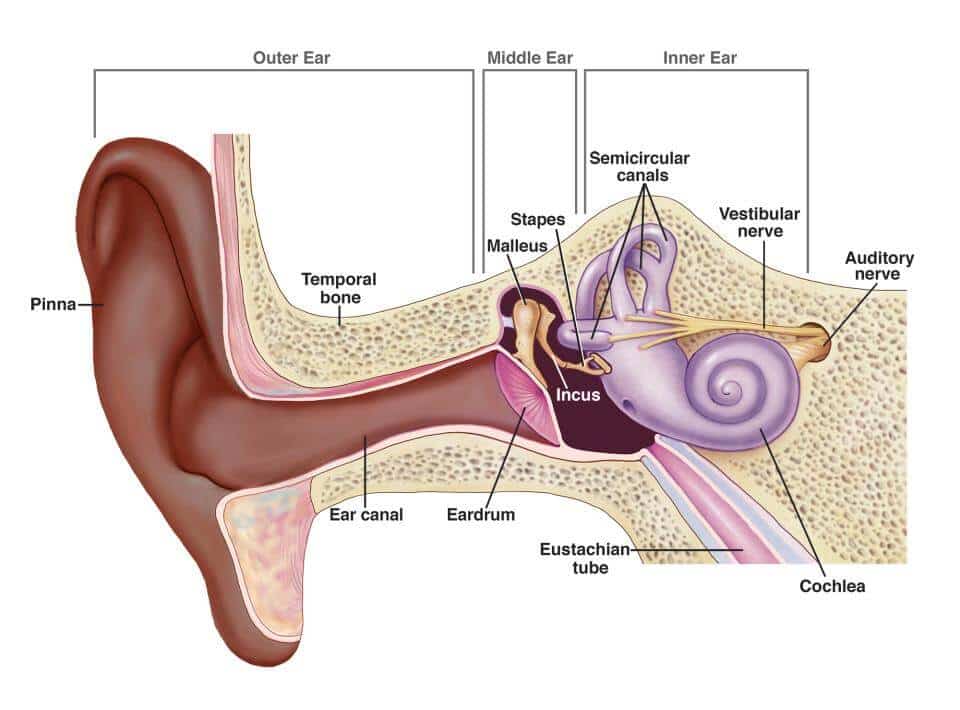
This cochlear-level regulation works in concert with earlier stages of sound processing:The ossicles (malleus, incus, stapes) efficiently transmit acoustic energy from the eardrum to the oval window.
The acoustic reflex—contraction of the tensor tympani and stapedius muscles—attenuates intense low-frequency sounds before they reach the cochlea.
Thus, hearing employs layered regulation: gross attenuation in the middle ear for loud sounds, followed by fine, frequency-specific amplification and compression in the cochlea via OHCs.
Implications for Hearing Loss and Modern Understanding
Damage to OHCs—from noise exposure, aging, or ototoxic drugs—is the most common cause of sensorineural hearing loss. It reduces sensitivity to faint sounds and blunts frequency selectivity, making speech perception in noise difficult even when sounds are amplified by hearing aids.Three decades after Ruggero’s review, this framework remains foundational. Advances in cochlear mechanics, hair-cell motility, and prestin (the OHC motor protein) have only strengthened the evidence for active OHC-based regulation.
The cochlea is not a passive frequency analyzer but a sophisticated feedback system where outer hair cells dynamically regulate the mechanical signal delivered to the true sensory cells—allowing us to hear whispers in a storm.