Table of Contents
The ear is a marvel of nature—a question mark curling around an enigma, whispering secrets of survival and speech. From its delicate curves to its hidden depths, it’s an organ of astonishing complexity, reaching a peak subtly in humans. To inquire about the ear is to face a labyrinthine puzzle, one that reveals how sound became the foundation of human connection.
A Three-Stage Symphony: Anatomy of the Ear
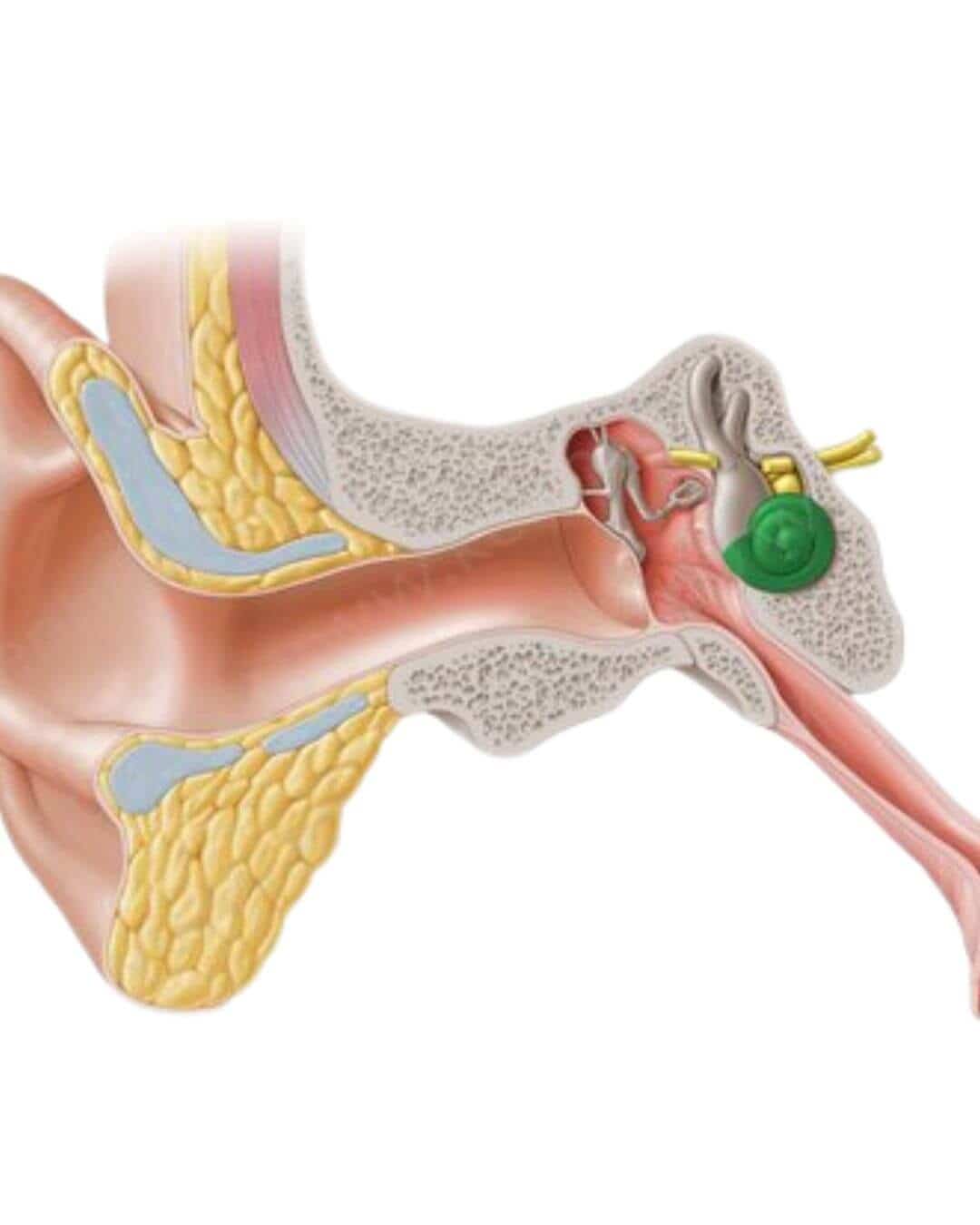
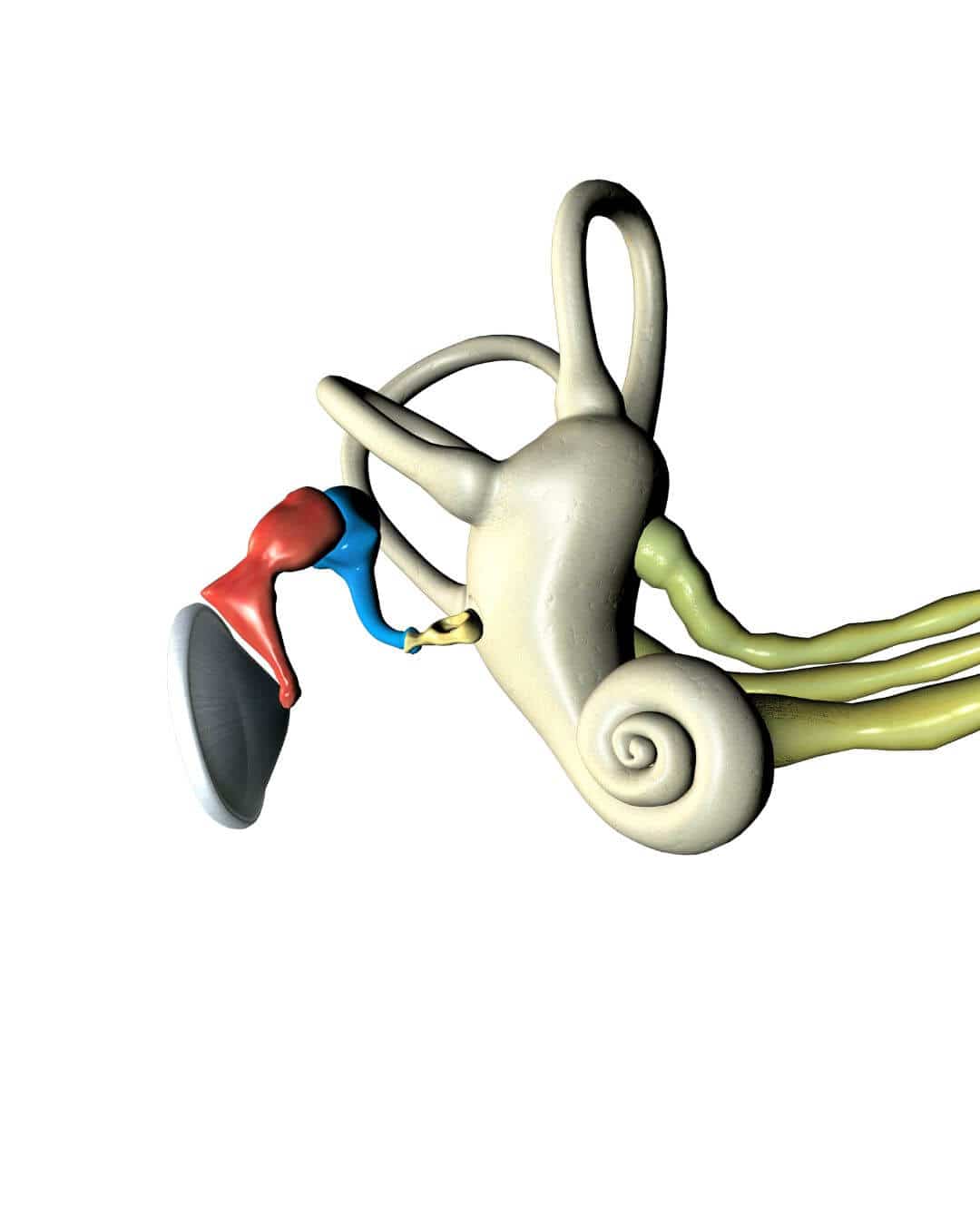
Anatomically, the ear is a masterpiece, a three-act structure channeling sound from the world to our minds. It begins with the outer ear—the auricle, or pinna, a sculpted funnel leading to the tympanic membrane, or eardrum. This visible shell collects vibrations, directing them inward like a natural amplifier. Next comes the middle ear, a tiny chamber housing the ossicles—three small bones nicknamed the hammer, anvil, and stirrup. Suspended by ligaments, this chain links the eardrum to the inner ear. The hammer’s handle embeds into the eardrum, while the stirrup’s footplate seals the inner ear’s membrane, a bridge trembling with every sound.
The inner ear, the third act, is the labyrinth—aptly named for its coiled complexity. Here lies the cochlea, the true organ of hearing, a spiral marvel translating vibrations into nerve signals. The vestibule, its neighbor, governs balance, but it’s the cochlea that sings the song of sound. Together, these stages—outer, middle, inner—form a functional unit, gathering noise and ferrying it across the ossicle bridge to ignite understanding.
Beyond Simplicity: The Ear’s Complexity
This might sound straightforward: sound hits the eardrum, rattles the ossicles, and stirs the cochlea. Yet, the reality is far more intricate. The ear’s operation defies simple explanation—its functional complexity mirrors its anatomical maze. Tiny muscles tweak the hammer and stirrup, fine-tuning tension to protect or amplify. The cochlea’s inner workings, a fluid-filled spiral, dance with hair cells that turn waves into electrical impulses. It’s a system so refined that describing it feels like sketching a cathedral with a single line.
But complexity is the point. The ear didn’t just evolve to hear—it grew to listen, to discern, to connect. From primal grunts to poetic verse, its journey reflects humanity’s leap from survival to civilization.
Evolution’s Masterpiece: Sound to Speech
Long ago, the ear was a sentinel, catching the rustle of danger or prey. Its wide sweep outpaced sight, smell, or touch, alerting us when other senses faltered. Over eons, this alertness morphed into awareness. As humans gathered, sound became more—grunts turned to words, cries to conversations. The ear, once a guard, now cradled language, its anatomical perfection enabling the precision of speech.
Teilhard de Chardin saw us emerging in a human sea, where sound wove bonds. The ear broke instinct’s chains, channeling sensory power into thought. A mother’s lullaby, a hunter’s call—these weren’t just noises; they were meaning, memorized and shared. The ossicles’ tremble, the cochlea’s hum—they built a system so coordinated it turned raw sound into culture, into intellect.
Hearing Becomes Listening
Where we once heard, we learned to listen—an intellectual leap. The ear intellectualized sound, transforming it from a survival signal to a creative force. A storyteller’s tale by firelight, a leader’s rallying cry—the ear captured these, feeding the mind’s furnace. It became an analytic tool, tracing the cosmic intelligence in every whisper, every song.
This evolution wasn’t just physical; it was existential. The ear’s complexity let us speak with precision, shaping language into a tool of thought. From the auricle’s curve to the cochlea’s spiral, it’s a testament to how hearing forged human connection, turning sound into the speech that defines us.
Conclusion
The ear’s evolution is our story—from a sentinel scanning the wild to a gateway of speech and society. Its intricate anatomy—outer, middle, inner—crafted a bridge from noise to meaning, from survival to intellect. Today, we listen not just to hear, but to understand, connect, and create—a legacy etched in every sound we embrace.